

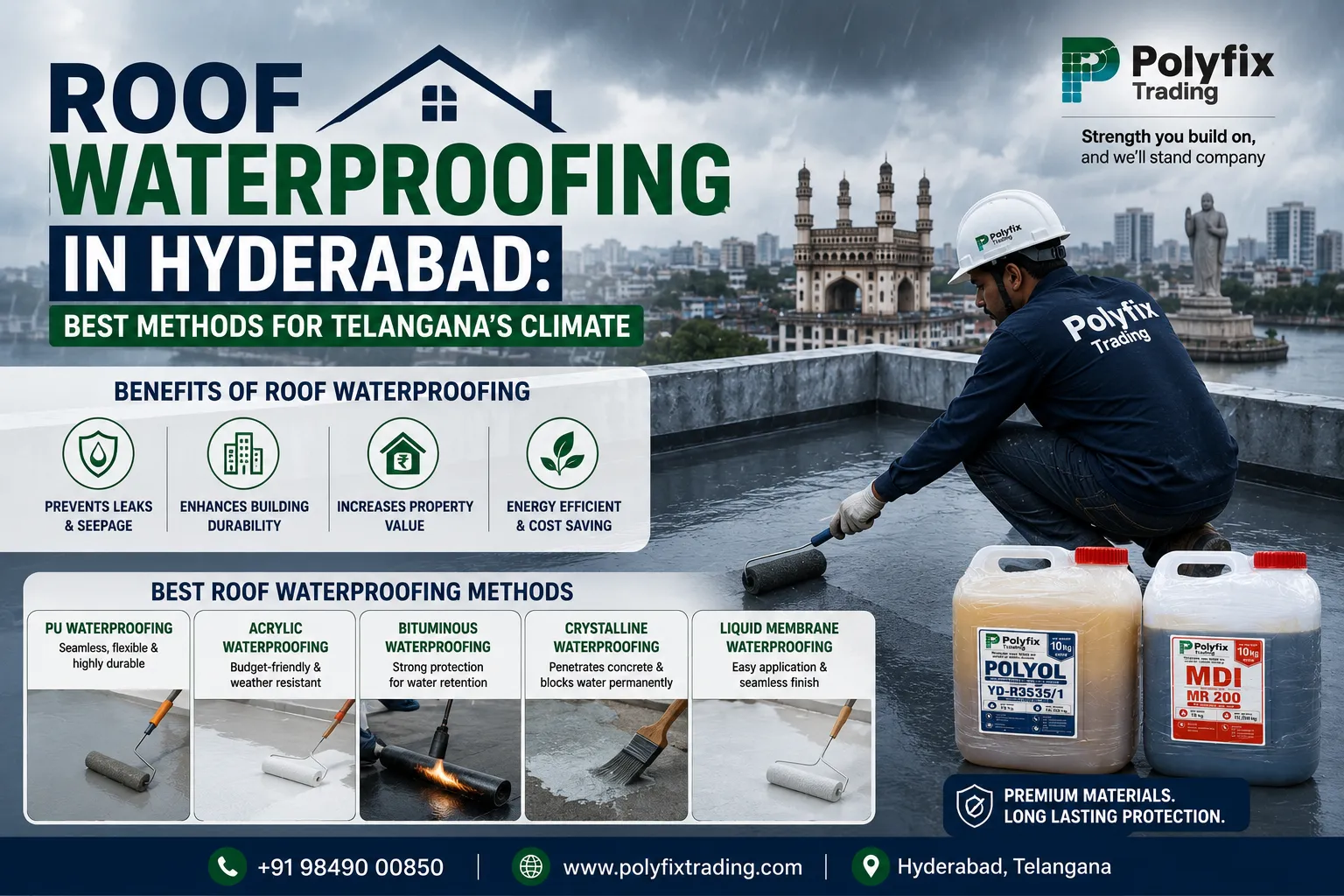
Hyderabad's climate is tough on roofs — intense pre-monsoon heat that bakes concrete for months, followed by heavy monsoon downpours that test every seam and joint. Choosing the right roof waterproofing in Hyderabad isn't just about stopping a leak; it's about picking a system that survives both extremes year after year.
This guide compares the methods that actually hold up in Telangana's climate — coatings, membranes, and traditional brick bat coba — along with realistic cost ranges and durability expectations, so you can make an informed decision before the next monsoon arrives.
Quick Facts Box
| Property | Details |
|---|---|
| Applicable Standard | IS 3067 (general design details and preparatory work for damp/waterproofing), supplemented by CPWD waterproofing specifications |
| Minimum Recommended Roof Slope | Generally 1 in 100, per IS 3067 guidance, to prevent water ponding |
| Common Methods | Brick bat coba, APP/SBS membrane, PU (polyurethane) coating, acrylic/cementitious coatings |
| Typical Cost Range (Hyderabad) | Roughly ₹70–220 per sq ft for terraces, depending on method and surface condition |
| Typical Lifespan | 4–15 years depending on method, application quality, and maintenance |
| Best For Hyderabad Climate | Systems with good UV resistance and flexibility to handle both summer heat expansion and monsoon water load |
| Ideal Timing | Pre-monsoon (before June) for new application; avoid mid-monsoon application where possible |
Note: Costs and lifespans vary by contractor, brand, surface condition, and site accessibility. Always get a site-specific quote before budgeting.
What is Roof Waterproofing?
Roof waterproofing is the process of applying a protective treatment — a coating, membrane, or layered system — to a roof or terrace surface to prevent water from penetrating into the structure below. It's typically combined with correct slope correction and drainage so water doesn't pond on the surface in the first place.
In Hyderabad, where terraces face months of harsh UV exposure followed by intense monsoon rainfall, a well-chosen waterproofing system needs to handle both thermal movement and continuous water contact without cracking or peeling.
Quick Answer: Roof waterproofing is the application of a protective coating, membrane, or layered treatment to a roof surface to stop water penetration into the structure. In Hyderabad's climate, the best systems combine UV resistance for summer heat with water resistance and flexibility for monsoon rainfall, applied over a properly sloped and prepared surface.
Why It Matters for Telangana's Climate
Hyderabad and greater Telangana see a distinct seasonal pattern: extended dry, high-UV summers followed by a concentrated monsoon season with heavy rainfall events. A waterproofing system that isn't UV-stable can degrade and crack before the monsoon even arrives, while a system without enough flexibility can fail under the thermal expansion and contraction of an RCC roof.
Roofs that aren't waterproofed correctly, or that use a system unsuited to local conditions, commonly start showing seepage, dampness, and ceiling staining well before their expected lifespan — often within just a few years of a poor-quality application.
Common Roof Waterproofing Methods
Brick Bat Coba (BBC)
A traditional method involving broken brick pieces laid in mortar over the roof to create slope, combined with a waterproofing compound and finished with tiles or a protective screed.
- Pros: Provides both slope correction and thermal insulation; long track record in Indian construction
- Cons: Heavier system, longer application time, requires skilled labour for proper slope execution
- Typical Cost: Roughly ₹40–160 per sq ft, depending on thickness, city, and material quality
APP/SBS Membrane
A torch-applied or self-adhered bituminous membrane sheet, considered a standard for many Indian terraces.
- Pros: Consistent factory-controlled thickness, good waterproofing performance, widely used and well understood by contractors
- Cons: Requires skilled torch-application; seams need careful sealing to avoid failure points
- Typical Cost: Roughly ₹140–260 per sq ft, with a typical lifespan in the 10–15 year range when properly installed
PU (Polyurethane) Coating
A liquid-applied, seamless membrane that cures into a flexible, elastic waterproof layer.
- Pros: Seamless application (fewer joint failure points), good UV resistance in quality formulations, flexible enough to handle thermal movement
- Cons: Requires a completely dry, well-primed substrate; quality depends heavily on correct wet-film thickness during application
- Typical Cost: Roughly ₹80–220 per sq ft, with an expected lifespan generally in the 8–12 year range for quality systems
Acrylic / Cementitious Coatings
Water-based or polymer-modified cementitious coatings, generally used for lighter-duty or budget waterproofing needs.
- Pros: Cost-effective, relatively easy to apply, reasonable option for terraces without major existing damage
- Cons: Shorter lifespan, less flexible than PU or membrane systems, generally needs more frequent reapplication
- Typical Cost: Roughly ₹40–120 per sq ft, with a typical lifespan of 5–8 years
Which Roof Waterproofing Method Lasts Longest?
Among common methods, APP/SBS membrane systems and quality PU coatings generally offer the longest service life, typically in the 8–15 year range when properly applied over a well-prepared, correctly sloped surface. Brick bat coba also offers strong long-term durability but depends heavily on skilled execution of the slope and mortar work.
Quick Answer: APP/SBS membrane waterproofing and high-quality PU coating systems generally last the longest among common methods, typically 8–15 years with proper installation. Brick bat coba can also last many years but depends on correct slope execution. Cementitious and acrylic coatings are more budget-friendly but usually need reapplication every 5–8 years.
Does Roof Waterproofing Prevent Heat Too?
Some waterproofing systems, particularly reflective or light-coloured coatings and brick bat coba's inherent thermal mass, offer a secondary benefit of reducing heat transfer into the building below. This isn't the primary function of waterproofing, but it's a useful consideration for Hyderabad's hot summers.
Quick Answer: Certain waterproofing systems, especially reflective acrylic coatings and brick bat coba, can help reduce heat transfer into the building along with providing water protection. While heat reduction isn't the main purpose of waterproofing, choosing a lighter-coloured or reflective system offers a useful secondary benefit during Hyderabad's hot summer months.
Applications
- Residential and commercial terrace waterproofing
- RCC flat roof waterproofing for apartments and independent houses
- Industrial and warehouse roof waterproofing
- Podium and parking deck waterproofing
- Balcony and sunken slab waterproofing (using compatible smaller-scale methods)
Industries and Property Types That Need Roof Waterproofing
| Property Type | Typical Waterproofing Need |
|---|---|
| Residential Apartments | Terrace waterproofing to protect top-floor units from seepage |
| Independent Houses | RCC roof waterproofing, often combined with heat-reduction needs |
| Commercial Buildings | Larger-area membrane or PU systems with drainage planning |
| Industrial Sheds | Roof waterproofing integrated with insulation systems |
| Institutional Buildings | Scheduled waterproofing as part of routine maintenance (often following CPWD-style specifications) |
Benefits of Proper Roof Waterproofing
- Prevents structural damage from long-term water penetration into RCC
- Protects against ceiling dampness, staining, and fungal growth in the floors below
- Extends roof lifespan by preventing freeze-thaw-style cracking from repeated wet-dry cycles
- Reduces long-term repair costs compared to reactive leak repairs after damage has occurred
- Improves indoor comfort when combined with reflective or insulating waterproofing systems
Advantages Over Skipping or Delaying Waterproofing
Delaying roof waterproofing, or relying only on reactive leak patching, typically leads to:
- Higher long-term costs, since water damage repair (plaster, ceiling, wiring) is usually far more expensive than preventive waterproofing
- Progressive structural damage as water continues to penetrate reinforcement over time
- Recurring, worsening leaks each monsoon season rather than a one-time preventive investment
How to Choose the Right Waterproofing Method
- Assess your roof's current condition — existing cracks or ponding change which method is appropriate
- Consider your budget alongside expected lifespan, not just the upfront cost per sq ft
- Match the system to your climate exposure — Hyderabad's high UV plus monsoon rainfall demands UV-stable, flexible systems
- Check slope correction needs — a system applied over poor drainage will fail regardless of material quality
- Ask contractors for their application experience with the specific method you're choosing
- Request a written warranty on both material and workmanship
Buying Guide
- Get a site inspection before committing to a method — existing damage changes the right approach
- Compare at least two to three methods suited to your roof type and budget
- Ask for surface preparation details included in the quote (cleaning, crack repair, primer)
- Confirm slope correction is addressed if ponding is an existing issue
- Clarify the coverage rate and number of coats/layers included in the quoted price
- Get the warranty terms in writing, including what voids it
- Schedule the work pre-monsoon wherever possible for proper curing conditions
Pricing Factors
- Method chosen — membrane and PU systems generally cost more than basic cementitious coatings but last significantly longer
- Surface condition — existing cracks, old waterproofing removal, or ponding correction add to the cost
- Roof accessibility — height and access constraints can affect labour costs
- Area size — larger areas typically get a better effective rate per sq ft
- Brand and material quality — established, quality-tested materials cost more upfront but reduce reapplication frequency
Quick Answer: Roof waterproofing cost in Hyderabad typically ranges from roughly ₹70 to ₹220 per sq ft, depending on the method chosen, existing surface condition, and area size. Basic cementitious coatings sit at the lower end, while APP membrane and premium PU systems cost more but generally last significantly longer.
Can Roof Waterproofing Be Done in Monsoon?
Most waterproofing methods require a dry substrate to bond and cure properly, making monsoon application risky and generally not recommended. If urgent repair is needed during monsoon, temporary measures or moisture-tolerant products should be used, with full waterproofing scheduled once the surface can dry out completely.
Quick Answer: Roof waterproofing is generally not recommended during active monsoon rainfall, since most systems need a completely dry surface to bond and cure properly. If a leak needs urgent attention mid-monsoon, temporary repair measures are advisable, with full waterproofing scheduled for a dry period before the next rainy season.
How Often Should Roof Waterproofing Be Reapplied?
Reapplication timing depends on the method used — cementitious and acrylic coatings typically need reapplication every 5–8 years, while APP membrane and quality PU systems can last 8–15 years before requiring renewal, assuming proper initial application and regular maintenance checks.
Quick Answer: Roof waterproofing reapplication timing depends on the method: cementitious or acrylic coatings generally need renewal every 5–8 years, while APP membrane and quality PU coating systems can last 8–15 years. Regular inspection, especially before monsoon season, helps catch early wear before it becomes a leak.
Storage Guidelines (For Waterproofing Chemicals)
If you're purchasing waterproofing chemicals for a DIY or contractor-supplied project:
- Store liquid coatings and PU components in a cool, dry area away from direct sunlight
- Keep containers sealed when not in use to prevent skin formation or moisture contamination
- Check the shelf life printed on the container, since PU and chemical-based systems have a limited usable window
- Avoid storing near open flame, particularly for solvent-based or torch-applied membrane materials
Handling & Safety Tips
- Use appropriate PPE — gloves and eye protection — when handling waterproofing chemicals
- Ensure good ventilation when applying solvent-based coatings
- Follow fire safety precautions during torch-applied APP membrane installation
- Allow adequate curing time before allowing foot traffic or water contact on newly waterproofed surfaces
- Keep the treated area protected from rain until initial curing is complete, as per the product's technical data sheet
Common Mistakes to Avoid
- Skipping surface preparation and crack repair before applying a new coating
- Ignoring roof slope, leading to water ponding even after waterproofing
- Choosing the cheapest method without considering lifespan and total cost of ownership
- Applying waterproofing during or right before heavy rain, without adequate curing time
- Not asking for a written warranty on material and workmanship
- Assuming waterproofing is a one-time job with no future maintenance neede
Expert Tips
- Address slope issues before choosing a coating method — no waterproofing product performs well over standing water
- Don't judge a method purely by material cost — factor in expected lifespan to compare true cost per year of protection
- Schedule an annual pre-monsoon inspection, even on a roof waterproofed a few years ago, to catch early cracks
- Ask about compatibility if reapplying over existing waterproofing — some systems don't bond well to certain older coatings
- Prioritise UV-stable formulations for Hyderabad's climate, since prolonged summer UV exposure is often the first thing to degrade lower-quality coatings
Frequently Asked Questions
Which roof waterproofing method lasts longest?
APP/SBS membrane systems and quality PU coatings generally offer the longest lifespan among common methods, typically 8–15 years with proper installation. Brick bat coba can also last many years when the slope and mortar work are executed correctly by skilled labour.
Does roof waterproofing prevent heat too?
Certain systems, particularly reflective acrylic coatings and brick bat coba's thermal mass, can help reduce heat transfer into the building alongside their waterproofing function. This makes them a useful secondary consideration for Hyderabad's intense summer heat, though heat reduction isn't the primary purpose of waterproofing.
How much does roof waterproofing cost in Hyderabad?
Roof waterproofing in Hyderabad typically costs between roughly ₹70 and ₹220 per sq ft, depending on the method, existing surface condition, and area size. Basic cementitious coatings are at the lower end, while APP membrane and premium PU systems cost more but offer significantly longer service life.
What is the best waterproofing for RCC roofs?
For RCC roofs in Hyderabad's climate, APP/SBS membrane and quality PU coating systems are generally considered the best options, offering strong water resistance, UV stability, and flexibility to handle thermal movement. The right choice also depends on your roof's existing condition, budget, and expected usage.
How often should roof waterproofing be reapplied?
Reapplication frequency depends on the method: cementitious or acrylic coatings typically need renewal every 5–8 years, while APP membrane and quality PU systems can last 8–15 years. Regular pre-monsoon inspections help identify early wear before it develops into a leak.
Can roof waterproofing be done in monsoon?
Roof waterproofing is generally not recommended during active monsoon rainfall since most systems require a dry, properly cured substrate to bond effectively. For urgent leaks during monsoon, temporary repair measures are advisable, with full waterproofing scheduled once the surface can dry completely.
Conclusion
Choosing the right roof waterproofing method in Hyderabad means balancing upfront cost against how long the system will realistically hold up under Telangana's combination of intense summer UV and heavy monsoon rainfall. Brick bat coba, APP membrane, and PU coatings each have their place — the right choice depends on your roof's condition, budget, and how long you want the protection to last.
Whatever method you choose, proper surface preparation, correct slope, and quality application matter just as much as the material itself. Working with an experienced, trustworthy contractor is what turns a good waterproofing product into a roof that genuinely survives the monsoon.
Ready for This Monsoon?
Don't wait for the first heavy rain to find out your roof isn't protected. Get a free roof waterproofing quote before this monsoon and let Polyfix Trading help you choose the right method — coating, membrane, or brick bat coba — for your specific roof and budget in Hyderabad or Telangana.